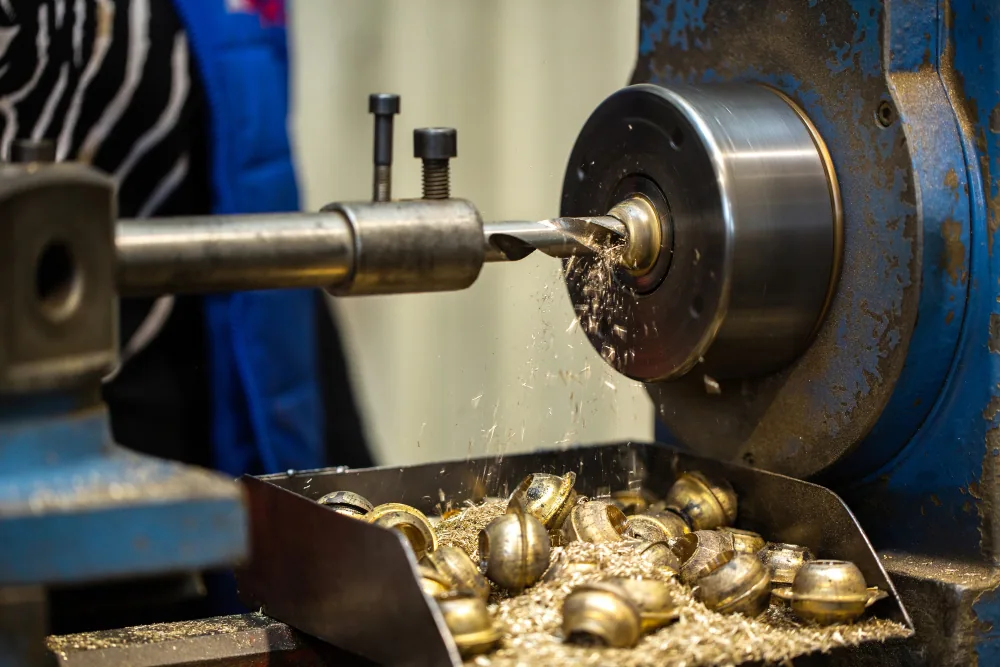
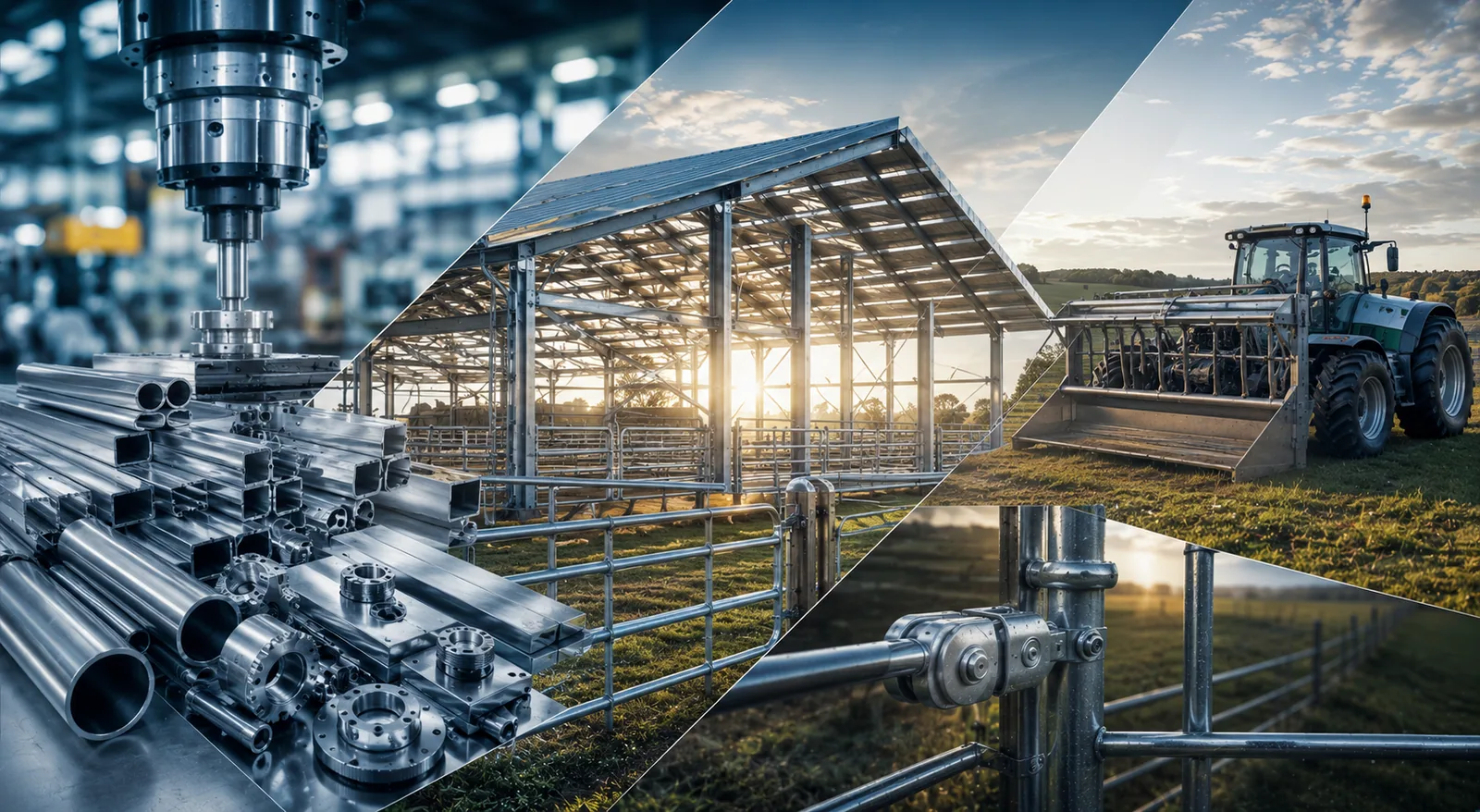
Farm Equipment Manufacturing Solutions
Smart Manufacturing for Farm Equipment — Real-Time Shop Floor Clarity
Farm-equipment manufacturing is complex: high-mix parts, long setups, and tight quality demands. Our monitoring solution gives you real-time visibility — so you can reduce setup times, cut rework, and boost throughput in your agricultural machinery lines.

The Challenge
In Farm - Equipment Manufacturing
 High Mix, Low Volume
Agricultural machinery factories often run many different parts (engines, hydraulic components, frames), and batch sizes vary widely — making planning and execution complex.
 Long and Unpredictable Setup Times
Tool changes, missing programs or drawings, and misaligned fixtures delay production, especially when machines switch between parts.
 Frequent Quality Rework
With high mix comes variation — and variation often causes rejections or rework. Without clear data, identifying the root causes (machine, operator, or part) is hard.
 Shift Handover Losses
Time lost during operator shift handovers is often invisible — but it slowly eats into productive hours.
 Supply-Chain Pressure & Cost Volatility
Farm-equipment OEMs face raw-material and component supply-chain risk, impacting cost and turnaround.
 Maintenance Overhead
Heavy agricultural machines require tight maintenance planning — unplanned downtime or poorly scheduled service hurts productivity and cost.
Our Solution
Real-Time Visibility Built for Ag Gear Manufacturing
We bring smart, data-driven monitoring tailored for farm equipment manufacturing — helping you tame complexity and improve efficiency. Setup Time Tracking & Alerts
Automatically log setup steps — flag missing tools or documents — and send alerts when setup times exceed expected thresholds.
 Operator Efficiency Analytics
Benchmark setup speed, rework, and machine utilization per operator → enable focused training.
 Quality Root-Cause Reporting
Track rejections by machine, part, and operator to identify recurring defects and reduce scrap / rework.
Shift Handover Loss Insights Measure and report on productivity losses during shift changes. Use data to optimize handover processes.
 Downtime & Utilization Dashboards
Real-time dashboards show machine status (running / idle / down), utilization trends, and availability.
 Predictive Maintenance
Monitor condition, usage, and wear to plan maintenance — minimize unplanned downtime and extend tool life.
 Audit-Ready Reports
Generate detailed reports for production, rework, and utilization — making quality reviews, customer audits, or internal reviews simpler.
Why It Matters
Business Impact for Farm-Equipment OEMs
 Reduce Non-Productive Time
By tracking and acting on setup inefficiencies, you can reduce idle and changeover losses.
 Lower Rework Costs
Quality analytics help identify and correct frequent rejection sources — saving material, labor, and time.
 Improve Shift Efficiency
Visibility into shift-change losses empowers you to streamline handover protocols and increase uptime.
Optimize Maintenance Spending Predictive insights let you service machines before failures — reducing costly downtime.
 Support Agile Production
With real-time data across parts and machines, you can adapt quickly to shifting orders and priorities.
 Strengthen Competitive Edge
In a challenging ag-OEM market with supply chain volatility, data-driven manufacturing gives you greater resilience.
How it works
From the Floor to Insight
 Connect Machines
Use IoT modules or protocol integrations to bring your CNCs, loaders, or other assembly machines online.
 Capture Setup & Cycle Data
Record every setup event, machine cycle, idle time, and running status.
 Monitor Live
Display live dashboards for machine utilization, downtime, and part flow.
 Analyze & Alert
Automate alerts for prolonged setup, repeated rejections, or underutilized machines.
 Act & Improve
Use insights to optimize setup processes, train operators, adjust shift handovers, and schedule maintenance.
 Report & Scale
Create audit-ready reports and gradually scale the system across your production lines.
Who Will Benefit
 Farm Equipment OEMs
Manufacturers of tractors, combines, harvesters, and other ag-machinery.
 Production Managers
Responsible for throughput, utilization, and part mix efficiency.
Quality Engineers Tracking rework, defect trends, and part-level quality.
Maintenance Planners Using data to shift from reactive to planned maintenance.
 Lean / Continuous Improvement Teams
Leveraging real data for HMLV optimization.
FAQ's
Q: Can this work for large, complex farm-equipment parts?
A: Yes — it's built for high-mix, low-volume production environments typical of ag-equipment manufacturing.
Q: How quickly can we onboard this?
A: You can go live on one machine quickly; our solution is designed for fast deployment without heavy IT overhead.
Q: Will we need new sensors or hardware?
A: Depending on your machinery, we may use retrofit IoT modules or integrate with your existing controls — minimal disruption.
Q: How does predictive maintenance work here?
A: We collect usage, downtime, and condition data to forecast when maintenance is required, helping you avoid breakdowns and extend asset life.
Q: Can this help us manage our labor better?
A: Absolutely — with operator-level efficiency data, you can identify who’s most efficient, where training is needed, and how to allocate work.