Pressure Die Casting & Machining Solutions
From Molten Metal to High-Quality Casts - Real-Time Insight for Die Casters
In high-pressure die casting, speed, precision, and die health determine your yield. Our solution gives you real-time visibility into die changeovers, defects, downtime, and part flow - so you maximize output, reduce scrap, and align casting with downstream operations.
The Problem
Why Die - Casting Needs Smarter Monitoring
 Complex Die Changeovers
Changing dies involves prep, cooling, tool setup — every minute lost adds up.
 Quality Risks Like Porosity & Air Entrapment
Defects such as porosity, oxide inclusions, and shrinkage arise from uncontrolled parameters.
 Unplanned Downtime
Die wear, cooling failures, or breakdowns hurt your uptime and throughput.
 High Maintenance Costs
Dies are expensive to repair or replace; poor maintenance planning shortens their life.
 Process Variability & Scrap
Manual tracking often hides correlations between setups, operators, and rejection rates.
 Safety & Regulatory Overheads
Handling molten metal and high-pressure equipment presents safety risks.
Our Solution
Precision Monitoring for High-Pressure Die Casting
We offer a powerful, purpose-built monitoring system for pressure die casting lines - combining casting and machining insights to help you make every shot count. Die Changeover Tracking
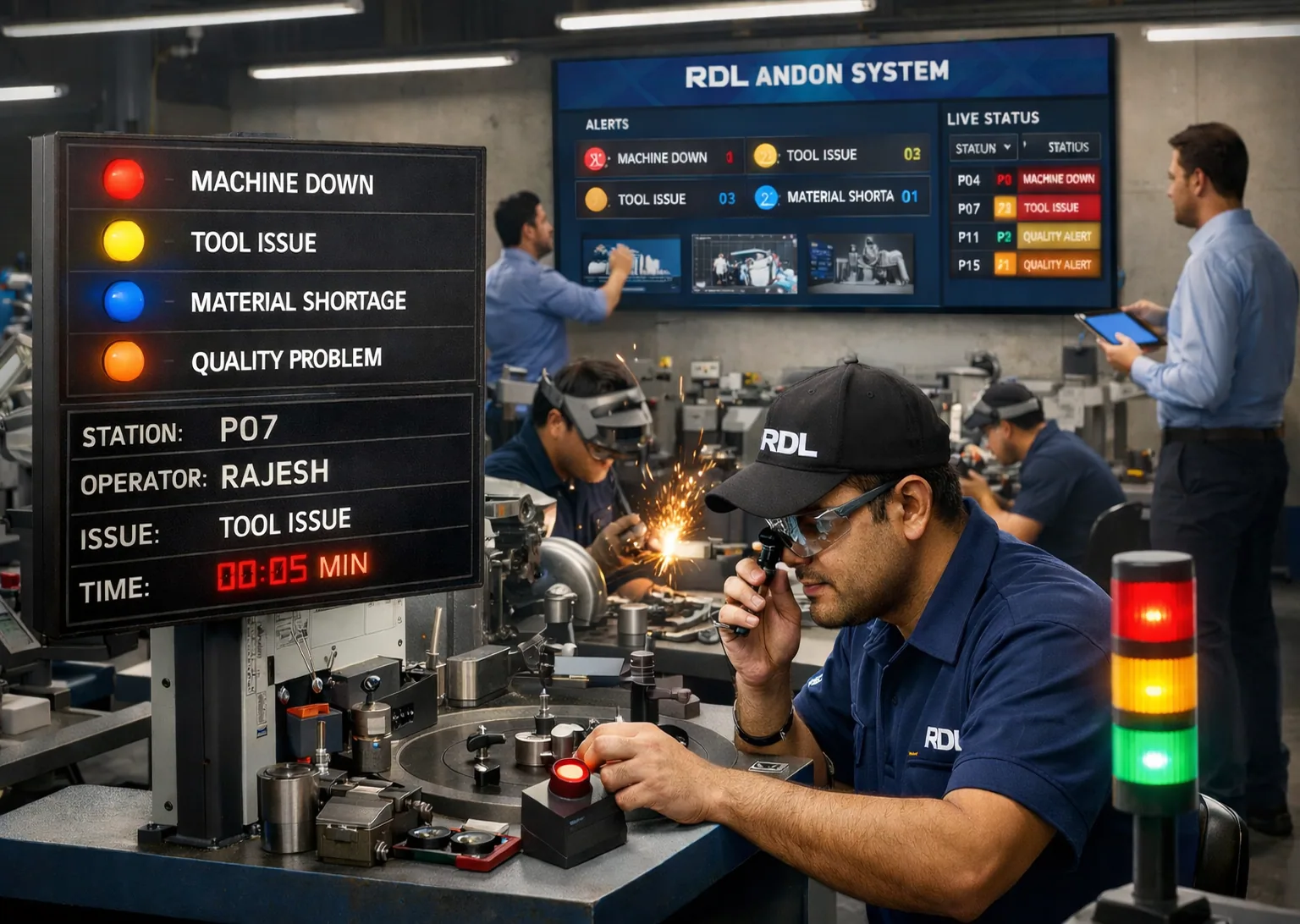
Log and analyze how long you take to change dies, and flag where delays happen - whether due to tool shortage, die prep, or alignment.
 Die-Specific Rejection Analytics
Connect rejection data (porosity, shrink, surface issues) to specific dies, operators, and shifts - helping you pinpoint quality root causes.
 Downtime Monitoring
Measure downtime driven by die wear, cooling circuit issues, or unexpected fault conditions.
 Predictive Die Maintenance
Generate MTTR (Mean Time to Repair), MTBF (Mean Time Between Failures), and wear trend reports - so you can plan maintenance before a costly failure.
 Casting-to-Machining Sync
Send alerts to downstream machining lines if casting output is lagging - prevent idle time or WIP buildup.
 Quality & Yield Correlation
Analyze how setup parameters (like die temperature or cycle conditions) affect rejection % and adjust accordingly.
 Live Dashboards & Alerts
Monitor cycle times, OEE, alerts on mobile - so you know when something’s off immediately.
 Audit-Ready Reports
Produce detailed reports on changeovers, defects, downtime, and maintenance — great for quality audits and traceability.
Business Impact
Why It Matters for Die-Casting Shops
 Improve Throughput
Reduce idle time and changeover losses, boosting your effective casting capacity.
 Reduce Scrap and Rework
Pinpoint process defects (e.g., porosity) and act to reduce rejection rates.
 Extend Die Life
Proactive maintenance and die-health tracking help you get more out of each die set.
 Better Operational Coordination
Sync casting with downstream machining to avoid bottlenecks or idle machines.
Safer, More Compliant Operations Real-time monitoring helps identify risky behavior or conditions and supports safety compliance.
 Cost Savings on Maintenance & Quality
Fewer breakdowns + lower defect rates = big savings over time.
How it works
Your Die-Casting Intelligence Journey
 Connect Machines & Dies
Deploy our IoT edge modules / integrate with your casting machine to capture shot-by-shot data.
 Track Changeovers & Shots
Record each die change, setup times, cycle times, and shot counts.
 Capture & Analyze Defects
Log reject data (e.g., porosity or misruns) with die / setup metadata.
 Monitor Die Health
Track metrics like cooling behavior, number of shots, and wear trends.
Sync with MachiningUse alerts and dashboards to align casting output with machining capacity.
 Act & Optimize
Use insights to improve maintenance schedules, tweak setups, reduce rejects, and boost utilization.
Who Should Use This
 High-Pressure Die-Casting Foundries
especially those producing aluminum, zinc, or magnesium parts.
 Operations / Production Managers
who want to reduce downtime and increase yield.
Quality Engineers looking for defect traceability per die, operator, or shift.
 Maintenance Planners
aiming for predictive maintenance and better die utilization.
 Continuous Improvement Teams
who need data to drive process optimization.
FAQ's
Q: How do you detect porosity or casting defects?
A: We don’t directly “see” internal porosity, but we correlate defect data (e.g., from quality inspection) with shot parameters (cycle time, temperature, die data) to help identify root causes.
Q: Can you predict die failure or wear?
A: Yes - using metrics like MTBF and wear-trend data, you can plan maintenance before a die fails.
Q: Do we need to upgrade our casting machines to use this system?
A: Not necessarily. We can work with existing machines using retrofit IoT modules or data integration.
Q: How does the system help with changeovers?
A: It logs every die-change event, tracks how long each step takes, and highlights where inefficiencies are occurring (tool shortage, die prep, etc.).
Q: What kind of ROI can we expect?
A: That depends on your defect rate, downtime, and changeover inefficiencies. But many die casters see significant reduction in reject volume and better die utilization, leading to cost savings.