Water Balancing System
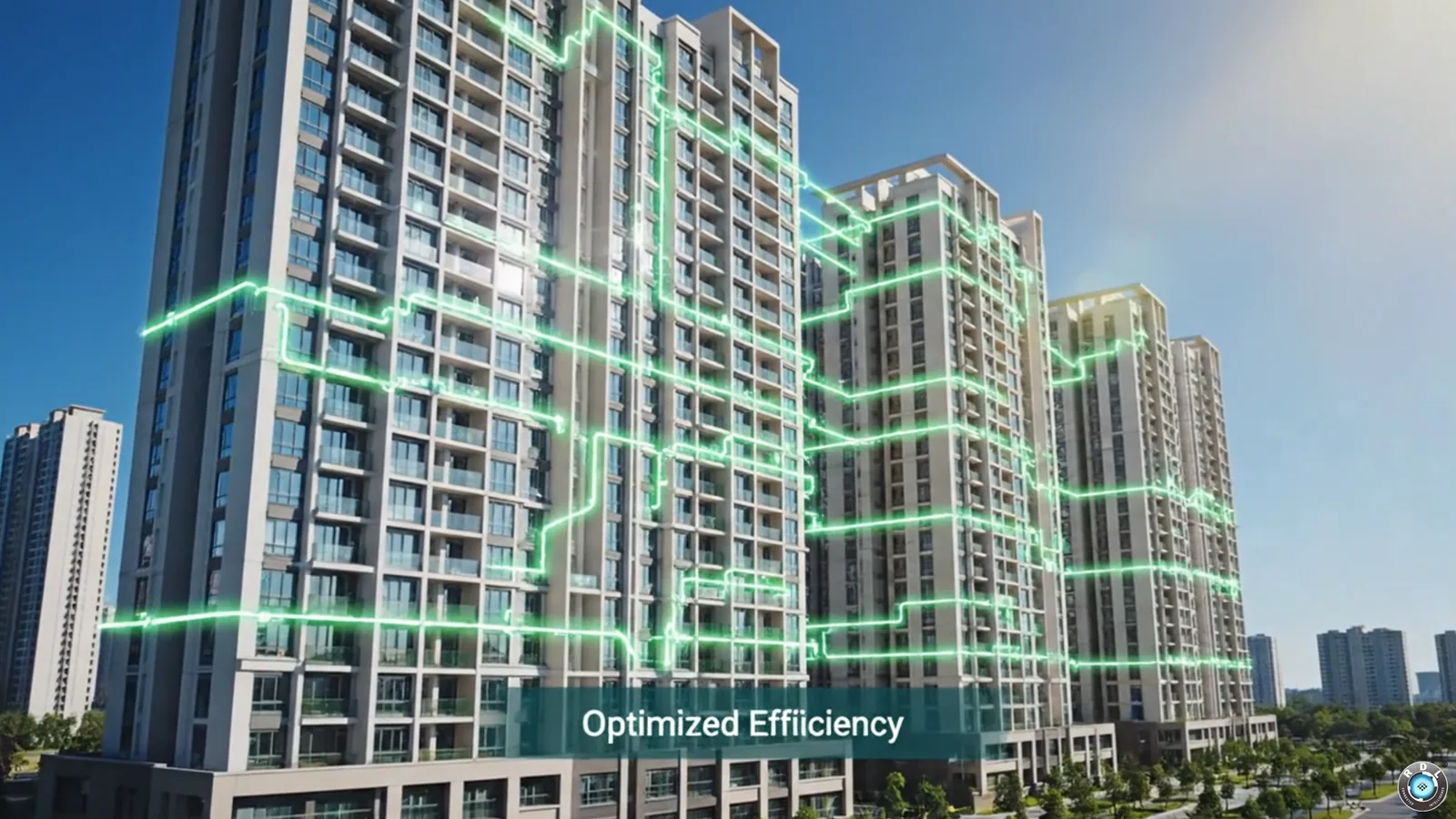
Water management is a critical challenge for modern residential, commercial, and industrial infrastructures. Uneven water distribution, leakages, and lack of visibility often lead to excessive wastage, high operational costs, and user dissatisfaction.
To address these issues, RDL Technologies Pvt Ltd developed an IoT-enabled Water Balancing System that ensures optimized water distribution, real-time monitoring, and intelligent control across multiple units within a facility.
Problem Statement
A multi-utility facility (apartment / commercial complex) faced the following challenges:
 Unequal water distribution across units. High water wastage due to undetected leaks. No real-time visibility into water consumption. Manual monitoring and inefficient control systems. Billing inaccuracies due to lack of usage data.
Solution Implemented
RDL deployed a Smart Water Balancing System integrated with IoT sensors, analytics, and remote monitoring capabilities.
Key Features Implemented
 Real-time monitoring of water levels and consumption. Unit-wise water allocation and balancing. Automated leak detection and prevention. Remote access and control via centralized dashboard. Integration with existing water infrastructure. Advanced analytics and reporting. Billing system integration for accurate usage tracking.
System Architecture
● Smart Water Meters & Sensors → Capture real-time consumption data.
● IoT Gateway → Collects and transmits data to the cloud.
● Cloud Platform / Dashboard → Data visualization, alerts, analytics.
● Control Mechanisms → Automated valves and distribution control.
● User Interface → Remote monitoring via web/mobile.
● Site survey and mapping of water distribution network.
● Installation of sensors and flow meters at critical points.
● Integration with existing pipelines and storage systems.
● Cloud dashboard configuration and analytics setup.
● User training and system commissioning.
Results & Impact
 Operational Improvements
● Achieved balanced water distribution across all units.
● Enabled real-time visibility of water consumption.
● Reduced manual intervention significantly.
 Cost & Resource Optimization
● Significant reduction in water wastage.
● Early detection of leaks minimized repair costs.
● Improved efficiency in water utilization.
 Transparency & Control
● Fair and transparent water allocation.
● Accurate billing based on actual consumption.
● Remote access for facility managers.
 Sustainability Impact
● Optimized water usage contributing to conservation.
● Reduced environmental footprint through efficient management.
● Smart and automated water management.
● Data-driven decision-making.
● Reduced operational and maintenance costs.
● Improved user satisfaction.
● Scalable for multiple facility types.
This solution is ideal for:
● Apartment complexes.
● Office buildings.
● Shopping malls.
● Hotels & resorts.
● Industrial facilities and warehouses.
Conclusion
The Water Balancing System by RDL demonstrates how IoT-driven automation can transform traditional water management into a smart, efficient, and sustainable system. By combining real-time monitoring, analytics, and control, organizations can achieve better resource utilization, cost savings, and operational excellence.