Cold Storage Monitoring System

Cold storage facilities play a critical role in preserving temperature-sensitive products such as food, pharmaceuticals, and biological materials. Even minor temperature deviations can lead to product spoilage, regulatory non-compliance, and financial loss.

To address these challenges, an IoT-based Cold Storage Monitoring System was implemented to ensure continuous environmental control, real-time monitoring, and automated alerting.
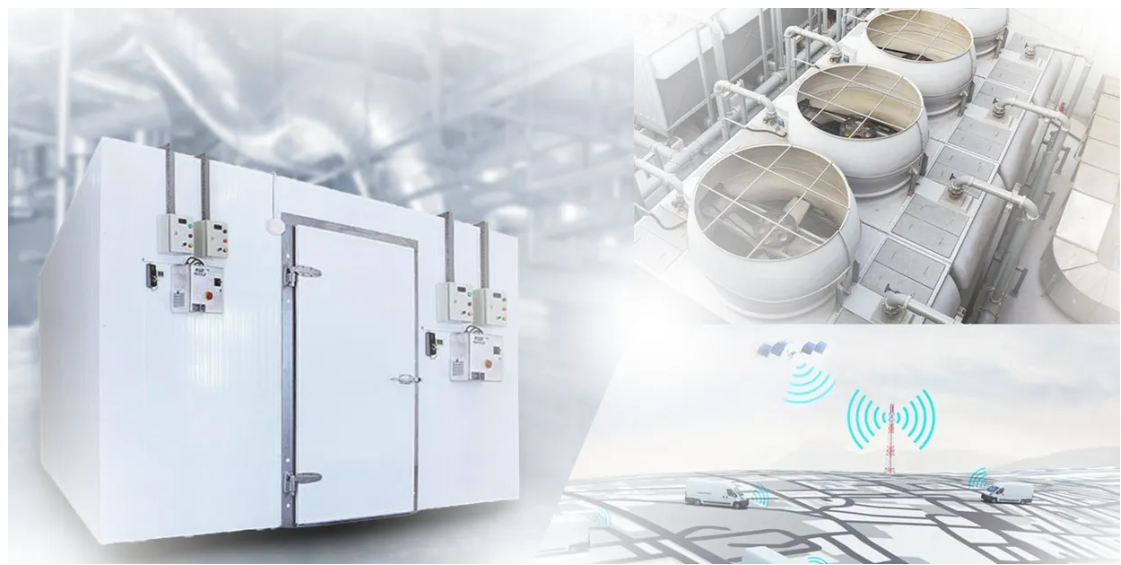
Cold Storage Monitoring

Problem Statement

The client faced multiple operational challenges in their cold storage facility:

  • Manual temperature logging leading to human errors.

  • Lack of real-time visibility across storage units.
  • Risk of product spoilage due to unnoticed temperature fluctuations.
  • Compliance issues due to improper record keeping.
  • High energy consumption without optimization.
These issues resulted in increased operational costs and reduced product reliability.


Objectives
The primary objectives of implementing the solution were:

  • Ensure 24/7 real-time temperature monitoring.

  • Maintain regulatory compliance with automated reports.
  • Reduce spoilage and wastage.
  • Improve operational efficiency and energy usage.
  • Enable remote monitoring and alerts.


Solution Overview
An IoT-enabled Cold Storage Monitoring System was deployed with the following components:
Key Features

  • Real-time monitoring of refrigerators and freezers.
  • Automated alerts for threshold breaches.
  • Cloud-based data logging and analytics.
  • Multi-sensor integration (temperature, environment).
  • Remote accessibility via web/mobile.
The system supports storage durations from short-term to long-term (days to years) while maintaining consistent environmental conditions.


System Architecture

Hardware Layer

  • Industrial Data Logger with IP68 enclosure.
  • Temperature sensors (multiple points).
  • Connectivity: Wi-Fi / GPRS / 4G / LTE.
Communication Layer
  • Protocols: MQTT, JSON, FTP with SSL security.
  • Integration with IoT platforms.
Application Layer
  • Cloud dashboard for monitoring.
  • Data analytics and reporting.
  • Alert system (SMS/Email notifications).
The system supports MODBUS RTU/TCP and multiple I/O interfaces, making it highly scalable and adaptable.


Implementation
The deployment included:

  • Sensor installation across critical storage zones.
  • Data logger configuration and network integration.
  • Cloud dashboard setup for centralized monitoring.
  • Alert thresholds configured for temperature deviations
  • Staff training for system usage


Applications

The solution is applicable across multiple industries:

  • Agriculture & food storage
  • Food & beverage processing
  • Pharmaceutical and healthcare
  • Blood banks and laboratories
  • Restaurant chains and cold warehouses


Key Benefits Achieved

Operational Benefits

  • Real-time monitoring eliminated manual checks.
  • Improved safety of stored goods.
  • Centralized visibility across multiple locations.


Business Benefits

  • Reduced spoilage and wastage.
  • Increased profitability.
  • Better compliance and audit readiness.


Technical Benefits

  • Data-driven decision making.
  • Predictive insights from historical data.
  • Scalable and customizable architecture.


Energy Benefits

  • Optimized energy consumption.
  • Improved efficiency through analytics.


Results & Impact

After implementation, the facility observed:

  • Significant reduction in product loss.
  • Improved compliance with regulatory standards.
  • Faster response to critical temperature deviations.
  • Enhanced operational efficiency and cost savings.


Conclusion

The Cold Storage Monitoring System transformed traditional storage operations into a smart, automated, and data-driven environment.

By leveraging IoT technology, the solution ensures product integrity, operational efficiency, and regulatory compliance, making it an essential system for any temperature-sensitive storage facility.